

Industry, in its most fundamental form, represents the backbone of economic development, societal progress, and technological advancement. For centuries, the concept of industry has undergone a profound transformation. From the early days of hand-crafted goods to the mechanized marvels of the Industrial Revolution, and more recently, the digitized, globalized operations of the 21st century, the industrial sector has been a powerful force driving change. Today, as industries grapple with the convergence of new technologies, sustainability imperatives, and ever-shifting global markets, the landscape is experiencing a monumental shift. This evolution presents both challenges and opportunities—requiring businesses and governments alike to rethink what it means to be competitive, innovative, and sustainable in a rapidly changing world.
The Historical Context of Industry
To understand the current state of industry, it is essential to appreciate the historical context from which it has emerged. The birth of industry can be traced back to the 18th century with the Industrial Revolution. This was a period marked by the transition from agrarian economies, where manual labor and craftsmanship were predominant, to more mechanized systems of mass production. The advent of steam engines, mechanized looms, and other innovations allowed for the rapid scaling of manufacturing capabilities, particularly in Europe and North America. This not only spurred economic growth but also fundamentally altered the social fabric, with people moving from rural areas to urban centers in search of work. It was during this time that industries such as textiles, coal mining, and steel production began to form the bedrock of industrial economies.
The 20th century saw the evolution of industry on an even more significant scale, driven by advances in electrical engineering, automation, and mass production techniques. The rise of companies like Ford, General Electric, and Siemens reshaped the global landscape, leading to a new era of consumer goods, transportation, and infrastructure development. Globalization further accelerated industrialization in the post-World War II period, as companies sought to expand their reach and tap into international markets. The industrial landscape had transformed from localized and regional operations to a sprawling, interconnected global network.
The Digital Revolution and Industry 4.0
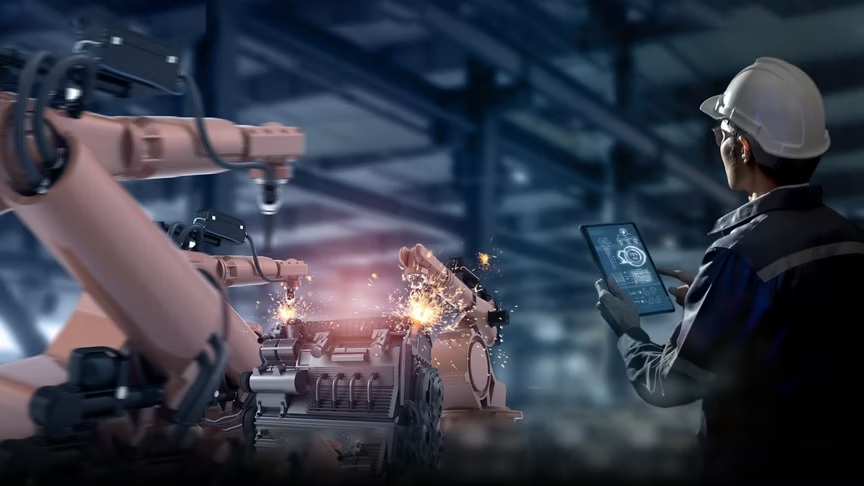
Fast-forward to the 21st century, and industry is undergoing another major transformation—one driven not by steam or electricity, but by data and digital technology. This new phase is often referred to as Industry 4.0, a term that encapsulates the fourth industrial revolution. Unlike its predecessors, which were centered around physical infrastructure and mechanization, Industry 4.0 is focused on the integration of digital technologies such as the Internet of Things (IoT), artificial intelligence (AI), machine learning, cloud computing, and robotics into manufacturing processes.
The most significant impact of Industry 4.0 is the ability of companies to collect, analyze, and act on real-time data from their operations. Sensors embedded in machinery, wearables on workers, and connected devices throughout supply chains enable businesses to monitor performance, predict failures, and optimize production in ways that were previously unimaginable. For instance, predictive maintenance powered by AI and IoT sensors helps identify potential equipment failures before they occur, reducing downtime and increasing productivity.
In parallel, digital twins—virtual models of physical assets—allow businesses to simulate and test processes, improving efficiency and reducing costs. Automation is no longer limited to repetitive tasks but is now extending into areas traditionally thought to require human ingenuity. In industries like manufacturing, construction, and logistics, robots, drones, and autonomous vehicles are playing increasingly central roles, performing tasks that range from assembly line operations to delivery.
The shift towards a more automated, data-driven approach is not just transforming production processes but also enabling new business models. Subscription-based services, predictive supply chains, and on-demand manufacturing are just a few examples of how Industry 4.0 is reshaping the way businesses operate. Companies that embrace these new models are able to respond faster to customer demands, offer more personalized products and services, and operate with far greater efficiency than ever before.
Sustainability: The New Frontier for Industry
While technological innovation has been at the heart of industrial evolution, the future of industry is increasingly intertwined with sustainability. As global concerns about climate change, resource depletion, and environmental degradation intensify, businesses are facing growing pressure to operate in a way that minimizes their environmental impact. This shift is not merely a regulatory necessity but a reflection of changing consumer preferences, where sustainability has become a key criterion for purchasing decisions.
For industries like energy, manufacturing, and transportation, this has meant an imperative to reduce carbon emissions, adopt cleaner technologies, and move toward circular business models. The renewable energy sector, for example, is one of the fastest-growing industries worldwide, with solar, wind, and hydroelectric power gaining significant market share. The global push towards electric vehicles is another example of industry’s response to sustainability challenges, as car manufacturers like Tesla, GM, and Ford move away from fossil fuels in favor of electric propulsion systems.
Manufacturing industries are also making strides toward sustainability through the adoption of green technologies and processes. Energy-efficient machines, the use of sustainable raw materials, and waste reduction practices are now commonplace in industries ranging from textiles to automotive. Additionally, the concept of a circular economy, in which products are designed to be reused, refurbished, or recycled, is gaining traction across a range of industries. By promoting the reuse of resources, businesses are reducing their reliance on virgin materials and cutting down on the environmental costs associated with waste.
This focus on sustainability, however, is not without its challenges. Many industries are grappling with the high initial costs of transitioning to cleaner technologies, as well as the technical complexities involved in adopting new systems. Yet, the long-term benefits are undeniable—both in terms of cost savings from energy efficiency and the ability to tap into an increasingly eco-conscious market.
The Globalization of Industry and Geopolitical Tensions
The globalization of industry has brought about unprecedented opportunities for economic growth and access to new markets. However, the interconnectedness of the global industrial system has also created vulnerabilities. Recent geopolitical tensions, such as trade wars, supply chain disruptions, and the COVID-19 pandemic, have highlighted the fragility of a highly globalized industry.
The COVID-19 crisis, in particular, exposed the vulnerabilities in global supply chains. From semiconductor shortages to disruptions in the production of medical supplies, the pandemic underscored how interdependent industries have become. This has led to a reevaluation of supply chain strategies, with many companies looking to diversify their sources of supply and bring production closer to home. The trend of “reshoring” or “nearshoring” is gaining momentum as businesses seek to reduce the risks associated with global supply chains.
In addition, the rise of protectionist policies in some countries, coupled with shifts in global trade agreements, is forcing businesses to reconsider their international strategies. For industries reliant on low-cost labor, such as electronics manufacturing, the need to balance cost efficiency with geopolitical stability is creating new challenges in sourcing, production, and logistics.
The Future of Industry: Trends to Watch
Looking ahead, several trends are poised to shape the future of industry. First, the continued rise of digital technologies will drive further innovation in automation, artificial intelligence, and data analytics. Companies that leverage these technologies effectively will be able to streamline operations, enhance customer experiences, and gain a competitive edge in the marketplace.
Second, the importance of sustainability will only continue to grow. The push for carbon neutrality, renewable energy adoption, and circular economies will be central to how industries evolve in the coming decades. Innovations such as carbon capture and storage (CCS) and sustainable manufacturing techniques will become increasingly vital in reducing the ecological footprint of industrial activities.
Finally, as industries become more interconnected through the global economy, the need for resilience and adaptability will be paramount. The ability to respond to supply chain disruptions, geopolitical shifts, and emerging technological trends will determine the long-term success of businesses and industries.
Conclusion
The industrial landscape is in the midst of a profound transformation. From the digitization of production processes to the growing demand for sustainability, industries across the world are grappling with new challenges and opportunities. The industries that thrive in the coming decades will be those that can innovate, adapt, and integrate new technologies and business models while staying responsive to global economic, environmental, and social shifts. As industries evolve, they will continue to be at the heart of economic development, driving progress and shaping the future of society.