

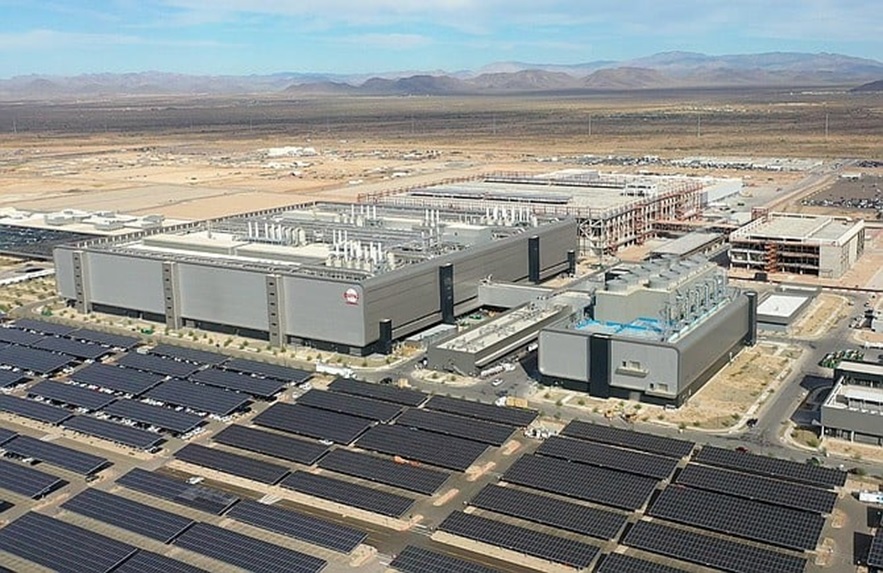
In November 2024, the Department of Commerce awarded TSMC Arizona a $6.6 billion grant, a momentous shift in American technological capabilities. This investment, which emerged from the bipartisan CHIPS and Science Act, marks a decisive move to reestablish the United States as a global leader in advanced semiconductor manufacturing.
The scale of investment reaches far beyond the initial federal support as TSMC Arizona undertakes an extraordinary $65 billion commitment in northern Phoenix. This investment represents the most significant foreign direct investment in a U.S. greenfield project, bolstered by an additional $5 billion in federal loans. The economic impact promises to be substantial, with projections indicating 6,000 permanent positions across the three planned fabrication facilities and creating more than 20,000 construction jobs throughout the development phase.
The timing of this development proves crucial, as American semiconductor production has experienced a significant decline over recent decades. From a position of producing 40% of global semiconductors, the nation’s production has contracted to just 10% of the world’s output. Establishing these advanced facilities aims to reverse this trend, positioning the United States at the forefront of technological innovation.
Each facility within the TSMC Arizona complex will fulfill distinct technological roles in the semiconductor landscape. The first plant entered high-volume production in Q4 2024, utilizing N4 process technology.
The second facility, scheduled to begin operations in 2028, will employ sophisticated N3 and N2 process technologies for producing chips essential to data center operations. The third and most advanced facility, announced alongside the federal grant, will manufacture A16 chips and implement pioneering 2nm technology, advancing semiconductor capabilities through the decade’s end.
Early performance indicators have exceeded expectations, with the initial facility demonstrating higher output levels than TSMC’s established Taiwan operations. This success has contributed to TSMC’s strong Q4 2024 performance, with revenue increasing 14.3% sequentially and achieving a 59% gross margin. The company’s advanced technologies, defined as 7nm and below, now account for 74% of wafer revenue.
Environmental stewardship stands as a cornerstone of the project, exemplified by plans for an advanced industrial water reclamation facility. This initiative aligns with a comprehensive sustainability strategy targeting a minimum 90% water recycling rate across operations, demonstrating a commitment to responsible resource management.
The project’s evolution since its 2020 inception reflects steady progress through significant milestones. Following the initial $12 billion commitment, sophisticated manufacturing equipment was installed in December 2022, and the second facility was announced. By February 2024, the second plant was structurally complete, followed by plans for the third facility.
This initiative exemplifies the broader success of the CHIPS for America program, which has allocated over $10 billion across 20 states since its August 2022 launch. With total proposed funding surpassing $36 billion, the program focuses on strengthening American technological infrastructure through strategic investments in research, development, and workforce advancement.
TSMC chairman and CEO Dr. C.C. Wei characterizes the project as a testament to collaborative innovation, highlighting the strategic partnerships formed between the company and its extensive network of stakeholders. Wei expects 2025 to be another strong growth year for TSMC, forecasting revenue to increase by close to mid-20% in U.S. dollar terms.
Establishing these facilities represents more than industrial expansion; it signifies a strategic realignment of American technological capabilities. As these plants progress toward full operational status, they will advance the nation’s position in global semiconductor production while fostering domestic innovation and economic growth. The success of early operations, coupled with strong market performance and industry support, suggests a promising trajectory for this ambitious undertaking.
This comprehensive initiative demonstrates the potential of public-private partnerships to rebuild critical manufacturing capabilities while ensuring America’s technological sovereignty for future generations. The project’s scope, ambition, and early achievements point toward a resurgence in American semiconductor manufacturing, which could have far-reaching implications for technological innovation and economic development in the decades ahead.