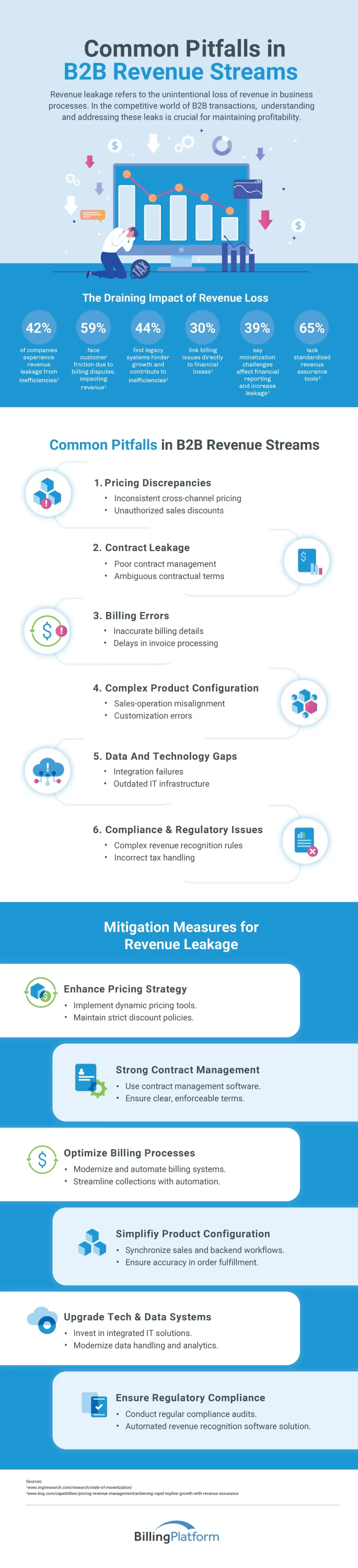


Revenue leakage is a persistent and often overlooked challenge for enterprise-level businesses, particularly in industries like financial services, fintech, SaaS, high tech, and media advertising. Given the high transaction volumes and operational complexity in these sectors, even minor inefficiencies can lead to significant revenue loss, compromising innovation, growth, and profitability.
Key Causes of Revenue Leakage
- Contract Mismanagement: High-stakes industries handle vast numbers of contracts, each with specific terms and conditions. When contracts are not properly managed or enforced, it leads to underbilling, missed renewals, or revenue that goes uncollected.
- Pricing Inaccuracies: In dynamic industries where pricing structures are complex and frequently updated, maintaining consistency is a challenge. Pricing errors—whether through unauthorized discounts or outdated price lists—can erode margins and harm financial performance.
- Billing and Invoicing Errors: Misalignment between services delivered and invoices generated, along with inefficient billing cycles, often delays collections or results in outright revenue loss.
Solutions to Combat Revenue Leakage
- Automated Contract Management: Implementing advanced contract management systems can streamline the process of tracking, enforcing, and updating contract terms. Automation ensures no revenue opportunity is missed due to manual oversight.
- Dynamic Pricing Engines: Sophisticated pricing tools that adjust in real time ensure accuracy across all customer transactions. These systems mitigate the risks of unintended underpricing or compliance errors.
- Enhanced Billing Systems: Modern billing platforms improve invoicing accuracy by integrating real-time service data and automating billing cycles to minimize delays.
Cross-Functional Collaboration and Technology
Combating revenue leakage requires alignment across leadership and departments:
- Finance Leaders: CFOs and senior finance executives should champion automated tools to increase visibility and accuracy across the revenue cycle.
- CIOs and IT Teams: Selecting and maintaining an effective technology stack is essential to minimize manual intervention and provide actionable analytics to detect leakage points.
- Product Management and Commercial Operations: Keeping product catalogs and pricing structures up to date ensures billing reflects current business rules and market dynamics.
By leveraging automation, improving cross-department coordination, and tightening internal controls, companies can mitigate revenue leakage risks. For enterprises operating in high-stakes industries, this approach is vital to protecting financial health, maintaining competitive advantage, and ensuring long-term success.
To gain a deeper understanding of this topic, please continue reading on to the infographic accompanying this post. Courtesy of BillingPlatform, an organization offering a billing operations solution.